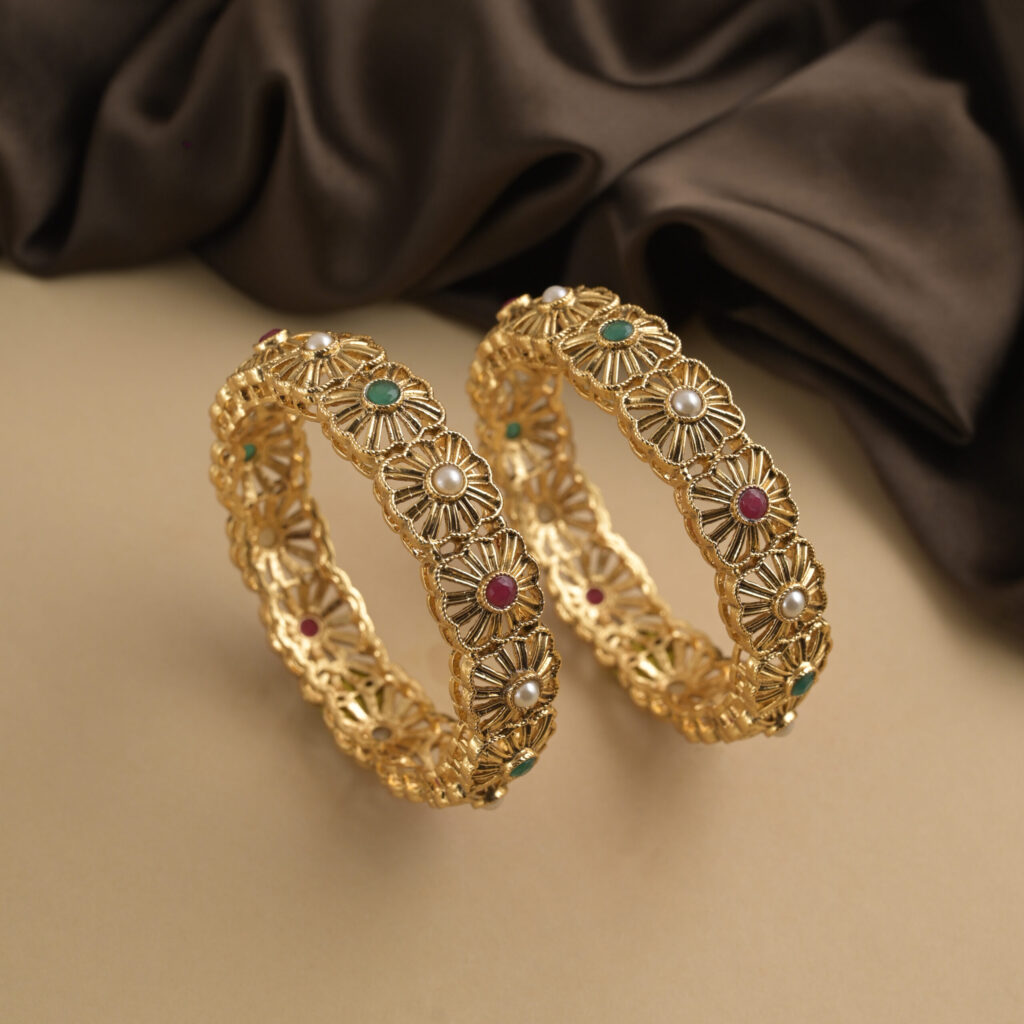
The Significance of Maharashtrian Jewellery: Stories Behind Every Piece
Jewellery in Maharashtrian culture isn’t just about looking good—it’s a blend of tradition,
symbolism, and even science. From weddings to festivals, these timeless pieces hold
emotional, cultural, and scientific significance. Let’s explore some of the most iconic
Maharashtrian jewellery pieces, their importance, and the science behind them.
Mangalsutra: More Than Just a Necklace
The mangalsutra is a sacred symbol of love and commitment for married women.
Traditionally, the black beads are believed to absorb negative energy and protect the
wearer from evil, while gold represents prosperity. Scientifically, wearing a gold
mangalsutra close to the skin helps regulate body temperature and improve blood
circulation. Over time, mangalsutras have evolved from heavy gold designs to modern,
sleek styles suited for daily wear.
Nath: The Nose Ring That Steals the Show
The nath, or nose ring, is a must-have for Maharashtrian women during weddings and
festivals. It’s made with gold, pearls, and red stones, adding elegance to any look. But
did you know? In Ayurveda, piercing the left nostril is linked to reducing menstrual
pain and easing childbirth. This is why nose piercings have been a part of Indian
tradition for centuries.
Thushi: The Royal Choker with a Purpose
The thushi is a stunning choker made of tiny gold beads woven together. It’s known for
its adjustable design, making it super comfortable. Beyond its beauty, gold jewellery like
thushi helps in maintaining warmth and positive energy flow in the body. No wonder
brides love adorning this royal piece on their special day.